Highlights:
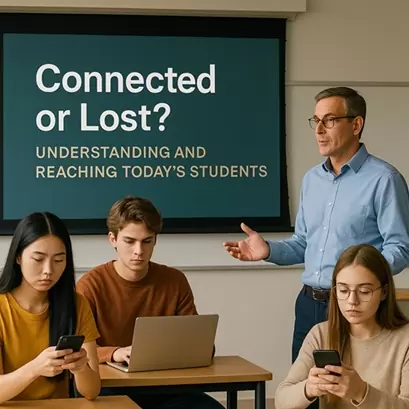
Many educators feel that it’s becoming increasingly difficult to truly connect with today’s students. Members of Generation Z and Generation Alpha think, learn, and communicate differently than previous generations – and they respond differently to classroom situations as well. This training is designed to help teachers feel less lost: it offers insights into how today’s young people see the world and what tools can help us genuinely reach them.
Through practical examples and shared reflection, participants will explore new strategies for sustaining attention, fostering motivation, and collaborating effectively – so that teaching can become a space of real connection, rather than a series of parallel monologues.
Every teacher has moments of doubt: “Why aren’t they listening?”, “How can I reach them?”, “How should I communicate to be understood?” or “Did what I just said even register?” Teaching today’s students – especially those from Generation Z and Alpha – often feels like trying to tune into a frequency that keeps shifting.
This course is built for those moments. It offers practical insights and strategies to help you:
- Better understand how today’s students think, learn, and communicate
- Build real connections and trust in the classroom
- Maintain attention without relying on gimmicks
- Motivate students in ways that feel relevant to them
- Navigate moments of disconnect without losing confidence
You’ll leave with renewed clarity, a toolbox of ready-to-use methods, and a sense that meaningful connection with students is not only possible – it can become the most rewarding part of your teaching. Whether you’re new to the classroom or a seasoned educator, this course helps ensure that you’re not just heard, but truly understood.
Description:
This 7- day training offers essential insights into how to meaningfully connect with today’s students. You will explore the core characteristics of Generation Z and Generation Alpha, and learn how their communication habits, learning preferences, and attention patterns differ from previous generations. The course helps educators turn disconnection into engagement, confusion into understanding, and frustration into cooperation.
You’ll receive a clear framework for improving classroom communication, sustaining student attention, and creating an atmosphere of trust. Throughout the training, we’ll combine theoretical foundations with hands-on, immediately applicable methods – so you can return to your classroom with strategies that work.
During the course, you will:
- Gain a deeper understanding of today’s students’ values, motivations, and digital habits
- Learn practical tools to increase attention and engagement in class
- Discover strategies to handle silence, resistance, or disinterest constructively
- Explore how to use your own communication style more effectively
- Practice techniques that foster mutual respect and student-teacher rapport
The training takes place in a small-group format to ensure personal attention and a collaborative, supportive environment. The focus is not only on what to change, but how to change it, so that connection becomes not a matter of luck, but of skill.
Aims and objectives:
This training aims to equip educators with a deeper understanding of Generation Z and Alpha students, as well as the tools and strategies needed to connect with them effectively in the classroom. The program helps participants recognize the key differences in how today’s students think, learn, and communicate, and provides solutions for common challenges such as low engagement, distraction, or resistance.
Beyond pedagogical techniques, the course builds participants’ confidence in navigating generational gaps, strengthening their ability to foster mutual respect and meaningful classroom dialogue.
Learning outcomes:
By the end of the course, participants will be able to:
- Identify core characteristics and communication styles of Gen Z and Alpha students
- Adapt their teaching and communication methods to better engage these generations
- Apply practical strategies to increase student motivation and attention
- Respond constructively to classroom silence, disengagement, or digital distraction
- Build stronger, trust-based relationships with students
- Create a classroom environment that supports active participation and mutual understanding
These outcomes will not only improve day-to-day teaching experiences but also contribute to participants’ long-term professional confidence and satisfaction.
Target groups: Teachers of all levels, special education teachers, support staff, school leaders, teacher trainers
Minimum level of language: English, B1
Trainer’s name: Ádám Guld
Location(s): Trogir (Croatia)
Duration of training: 35 lessons, 7 days
Dates:
- 26 July-01 August 2026 CONFIRMED
- 25-31 July 2027 Planned
The final confirmation of the course is subject to reaching the minimum number of participants.
Price: EUR 560+ EUR 50 REGISTRATION FEE
This price includes: course, certificate, Erasmus+ documentation (if needed),
Prices are NET prices. VAT: 0% for organisations with a valid EU VAT number; in all other cases VAT may apply – please contact us for details.
Applicable funds: As part of the Erasmus+ Key Action 1 (KA1), all costs for mobility /travel expenses, course fees, accommodation, subsistence fee/ are covered by the fund.
Planned program TROGIR:
Day 1: Sunday: Arrival, introduction of the course and the venue, participants’ introductions
Registration throughout the day
14:30 – 15:00: Introduction to the venue and the course curriculum
15:00 – 17:30: Creating a trusting, cooperative learning environment through interactive activities
18:00 – 19:30: Assessing prior knowledge and knowledge sharing
Day 2: Monday
- The World of Generation Z and Alpha
- Mindset and information processing
- Digital habits and attention management
- Values and identity
- Why Aren’t They Paying Attention? – The New Logic of Attention
- Multitasking and dopamine effects
- Short attention cycles
- Role of teacher presence
- Case study analysis: typical “disconnect” situations
- Learning outcome: conscious recognition and interpretation of generational characteristics
Day 3: Tuesday
- Connection and Trust in the Classroom
- Psychology of trust
- Authenticity and consistency
- Mapping Communication Styles
- Identifying personal communication patterns
- Verbal and non-verbal signals
- Self-reflection exercise: “What am I actually conveying?”
- Methods: self-assessment questionnaire, pair work, feedback circles
- Learning outcome: more conscious and authentic teacher communication
Day 4: Wednesday
- Motivation and Relevance
- What drives today’s students?
- Strengthening intrinsic motivation
- Attention-Sustaining Strategies Without Trick
- Activating questioning techniques
- Micro-activities
- Structured interaction
- Lesson redesign workshop
- Learning outcome: immediately applicable motivation and engagement toolkit
Day 5: Thursday
- Handling Silence, Resistance, and Disinterest
- Interpreting silence constructively
- Conflict prevention strategies
- Constructively Managing Digital Distraction
- Mobile use and attention
- Opportunities for digital integration
- Situational exercises and solution strategies
- Learning outcome: confident handling of challenging classroom situations
Day 6: Friday
- Culture of Mutual Respect
- Boundaries and frameworks
- Empathy and consistency
- Classroom Environment Built on Active Participation
- Community-building techniques
- Involving student voice
- Developing a personal action plan
- Learning outcome: creation of a trust-based, collaborative learning environment
Day 7: Saturday: Closing of the course
8:30 – 10:00: How will I use what I have learned in my lessons? What did I learn this week? Preparation for dissemination – 5-minute presentation by each participant
10:00 – 10:15: Break
10:15 – 11:45:
Course evaluation and feedback
Certificates and certificates of attendance
Issuing of certificates – photo session

Ádám Guld
Associate Professor, Communications Consultant, Researcher and Writer
He is an experienced researcher specializing in communication and media studies. With a solid academic background, I have extensive expertise in planning, managing, and conducting research across various media forms, content, and audiences.